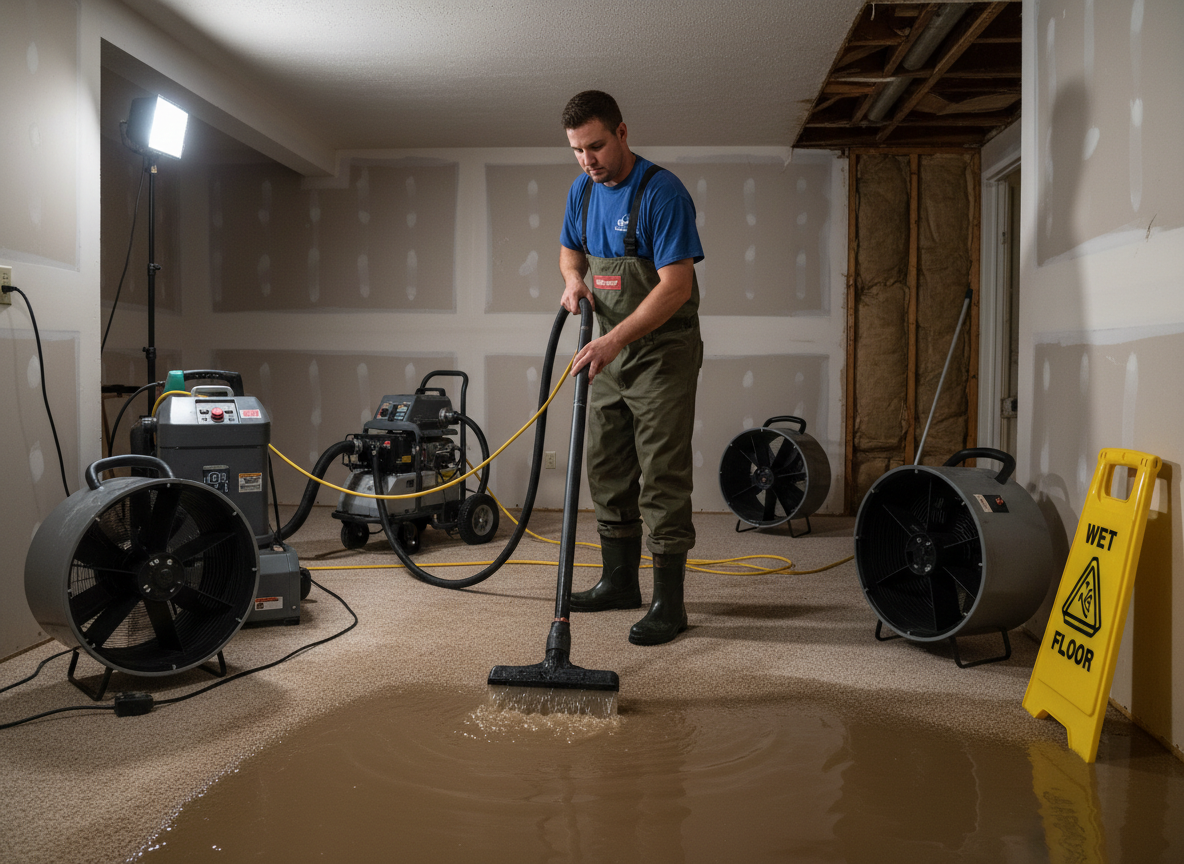
Riverton homes built before 1990 often have galvanized or polybutylene lines that corrode at joints where cold winter temperatures cause contraction. When a pinhole leak develops under a slab in Harvest Park or Western Springs, water migrates along the compacted clay soil and pools against foundation walls rather than evaporating quickly in the semi-arid climate. Technicians must trace moisture with infrared cameras and open strategic access points because surface drywall can appear dry while subflooring remains saturated.
Appliances in newer Riverton Meadows construction frequently leak at supply valves behind refrigerators or washing machines. Because local codes require shut-off valves within six feet of each fixture, restoration crews first isolate the source, then extract standing water before mold sets in during the brief shoulder seasons between hot summers and freezing nights. Hidden leaks behind tile in bathrooms near Old Dome Meeting Hall commonly travel along the joist bays into adjacent rooms, requiring removal of baseboards and toe-kicks that homeowners rarely anticipate.
After extraction, drying targets are set using the county’s typical 25-35 percent relative humidity. Dehumidifiers run longer here than in coastal markets because the dry air outside can mask lingering moisture in carpet padding or under vinyl plank flooring. Final verification includes moisture meter readings on both sides of shared walls to prevent callbacks when neighbors in South Jordan or Herriman report musty odors weeks later.
Technician insight
In Riverton the thing that catches most people out with water leak restoration is how cold winter nights make older polybutylene lines in Western Springs crack right where the pipe enters the slab, sending water under the footing instead of pooling inside the house where it is easy to spot.
Slab Leak Near Riverton City Park
A homeowner in Harvest Park noticed warm floors and rising humidity. Inspection revealed a pinhole in a copper line under the slab that had traveled along the clay soil into the garage. Crews isolated the line, extracted water from beneath the vinyl, and dried the subfloor over four days before replacing the affected section and restoring the floor.
How it works
- 1
On-Site Assessment
Technicians arrive within hours, locate the leak source, and document moisture migration through flooring and walls using meters and imaging.
- 2
Water Extraction
Standing water is removed with truck-mounted pumps and portable extractors before hidden pockets are addressed behind baseboards and under cabinets.
- 3
Targeted Drying
Air movers and dehumidifiers are positioned according to construction type, with daily moisture checks to confirm drying progress in Salt Lake County’s variable climate.
- 4
Restoration and Verification
Damaged materials are replaced, surfaces are sanitized, and final readings confirm the structure is returned to pre-loss condition.
Pricing
Upfront quotes provided after inspection; cost depends on leak location, duration, and materials affected.