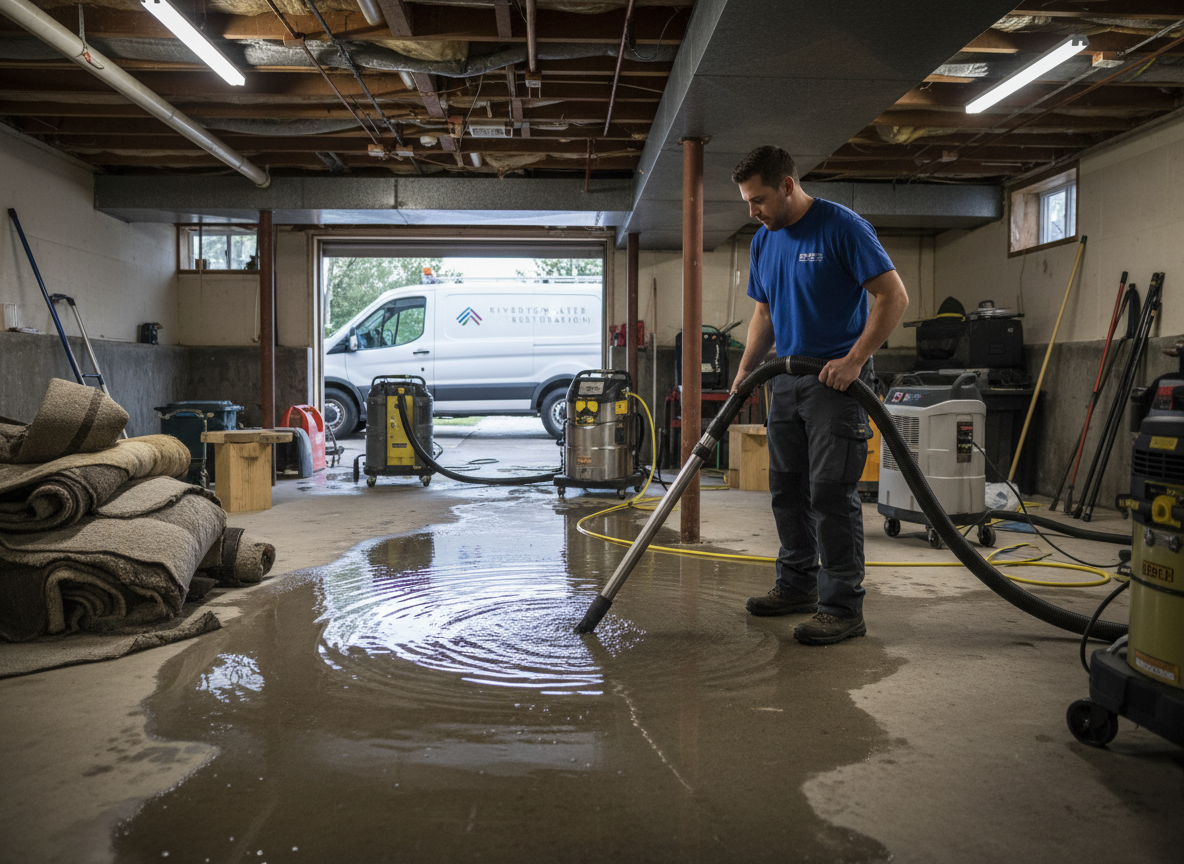
In Riverton the cold winters that settle over Salt Lake County often send temperatures low enough to freeze supply lines in homes built before the 1990s. Properties in Western Springs and Harvest Park frequently show slab leaks or burst lines under older concrete where insulation was never added. When water escapes it travels quickly through the clay-heavy soil that underlies much of the area, pulling moisture into finished basements and crawl spaces. Emergency water removal crews must extract standing water within hours or risk mold that thrives once the semi-arid air finally dries the surface.
Hot summers bring a different set of problems. Irrigation ditches that border Riverton Meadows and fields near the Old Dome Meeting Hall can overflow during peak watering cycles, sending water across driveways and into garages. South Jordan and Herriman homeowners sometimes see the same water migrate east into Riverton basements because the slight grade runs toward the Jordan River corridor. Extraction equipment must handle both clear water and the silt it carries without driving fines deeper into drywall or subfloors.
Technicians working out of the 1926 W 12600 S shop keep truck-mounted extractors and air movers ready year-round. They cut small inspection holes in wet drywall rather than tearing entire walls, then use moisture meters to confirm hidden pockets behind cabinets common in 1980s Riverton construction. This approach limits secondary damage while meeting the drying standards required before any rebuild work begins.
Because Riverton sits inside Salt Lake County, crews also watch for code requirements on electrical shutoffs and permit triggers once water reaches panel boxes or furnace rooms. Homeowners in Draper and Herriman who call after hours still reach the same local team that knows which streets flood first during monsoon cells.
Technician insight
In Riverton the thing that catches most people out with Emergency water removal is how fast water travels under the slab in Western Springs homes built on that clay layer. Homeowners shut off the main but skip checking the crawl space, then wonder why the drywall still reads wet three days later.
Burst line under garage slab in Harvest Park
A supply line froze and split beneath the garage slab of a 1987 Harvest Park home. Water migrated under the living-room floor and into the adjacent bedroom closet. Crews extracted standing water, opened two inspection points behind the baseboards, and ran drying equipment for four days until readings matched unaffected areas.
How it works
- 1
Arrival and Safety Shutoff
Technician reaches the address, locates the water source, and secures electrical and gas lines before any extraction begins.
- 2
Standing Water Extraction
Truck-mounted pumps and wands pull bulk water from floors, carpets, and hard surfaces while documenting affected rooms.
- 3
Moisture Mapping
Infrared cameras and meters locate hidden moisture in walls, under cabinets, and in crawl spaces typical of Riverton homes.
- 4
Drying and Monitoring
Air movers and dehumidifiers are placed; daily readings continue until materials return to pre-loss moisture levels.
Pricing
Pricing depends on water volume, number of affected rooms, and whether hidden moisture requires wall or floor access.