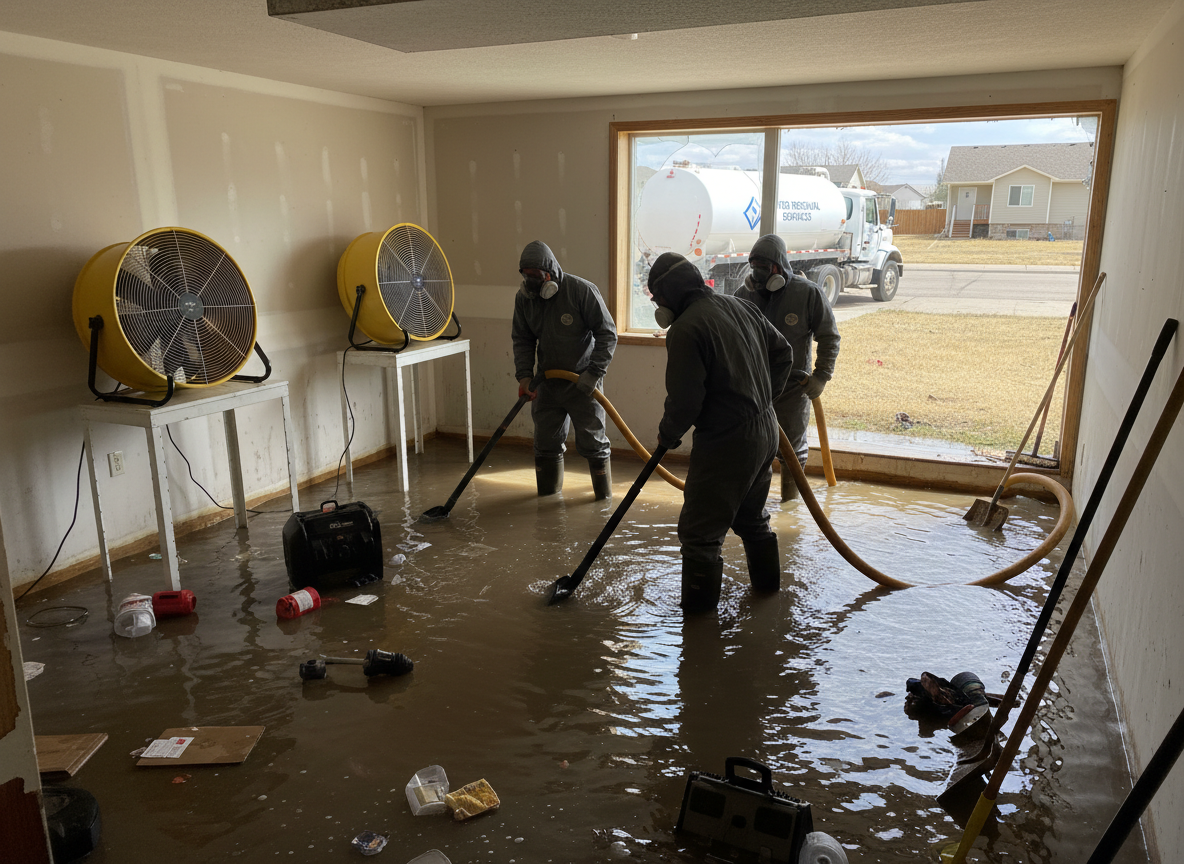
Emergency water cleanup in Riverton often starts with hidden leaks in older homes built before the 1990s that sit on clay-heavy soils around Western Springs and Harvest Park. Cold winter nights drop temperatures fast enough to split copper lines and PEX joints, sending water under floors before anyone notices. Crews from Anchorpoint Trust at 1926 W 12600 S respond within the hour, using moisture meters to trace water that has wicked into subfloors and wall cavities common in single-story ranch houses throughout Riverton Meadows. Semi-arid summers bring their own issues when irrigation ditches overflow near Riverton City Park and Old Dome Meeting Hall, pushing silt into basements.
Extraction begins with truck-mounted pumps to pull standing water before it reaches electrical boxes or HVAC returns. Technicians then place air movers and dehumidifiers sized for the square footage and run them until readings hit under 15 percent moisture content on drywall and joists. In Salt Lake County homes near Draper and South Jordan, crews often find water trapped behind cultured stone fireplaces or under tiled entryways that look dry on the surface. Removing baseboards and drilling small weep holes allows air to circulate without tearing out entire walls.
Homeowners in Herriman and South Jordan sometimes discover that their slab-on-grade foundations sit lower than street level, so storm runoff from heavy spring melt funnels straight into garages. Anchorpoint Trust crews document every step with photos and readings so insurance adjusters see exactly where water traveled. Drying times stretch longer in winter because cold air holds less moisture, requiring heaters alongside dehumidifiers to keep the process moving.
Winter Pipe Burst Patterns
Cold snaps in Riverton hit hardest on north-facing walls and uninsulated crawl spaces common in homes built in the 1970s and 1980s. Technicians check for ice dams along rooflines near Riverton City Park that force meltwater behind siding.
Irrigation Flooding in Summer
Ditch overflows near Harvest Park push sediment into finished basements. Crews use HEPA vacuums after extraction to remove fine silt that otherwise stays in carpet pads.
Technician insight
In Riverton, the thing that catches most people out with Emergency water cleanup is how clay soil around Western Springs and Harvest Park holds water for weeks after a pipe burst. Homeowners shut off the water and think the job is done, but the moisture keeps wicking up into base plates until we get air moving under the floor.
Burst Line Under Kitchen in Riverton Meadows
A cold snap split a supply line under the kitchen floor of a 1980s ranch house. Water spread under the slab and into the adjacent family room carpet. We extracted standing water, opened the toe-kick under cabinets, and ran drying equipment for four days until readings dropped below 12 percent. The homeowner avoided full floor replacement.
How it works
- 1
Arrival And Safety Shutoff
Technician arrives, locates the water source, and shuts off supply or power as needed before any extraction begins.
- 2
Standing Water Removal
Pumps and wet vacuums pull bulk water from floors, carpets, and low areas while protecting unaffected rooms.
- 3
Moisture Mapping
Infrared cameras and meters locate hidden moisture in walls, subfloors, and cabinets throughout the affected structure.
- 4
Drying And Monitoring
Equipment runs until readings confirm the structure is dry, with daily checks to adjust placement and prevent secondary damage.
Pricing
Upfront quotes after on-site inspection; final cost depends on water volume, affected square footage, and drying duration.