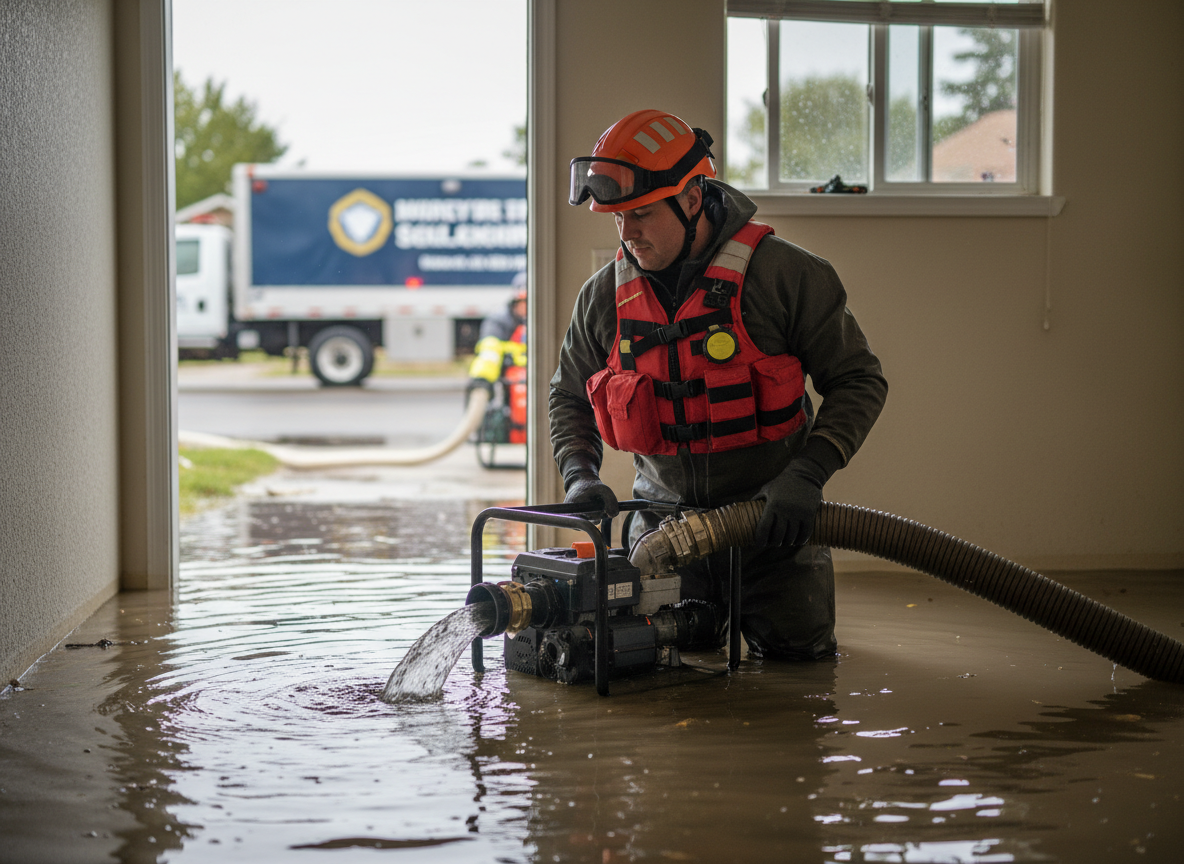
Rapid water extraction in Riverton starts with locating every pocket of standing and trapped water before it migrates into drywall or subfloors. In neighborhoods such as Riverton Meadows and Western Springs, many homes built on older slabs sit close to the water table, so crews must pull carpet and pad immediately and use moisture meters on concrete to prevent hidden saturation from reaching adjacent rooms. Semi-arid conditions with sudden cold snaps in winter often cause supply-line failures, while summer monsoons send runoff across flat lots in Harvest Park, turning yards into temporary ponds that press against foundations.
Equipment choice matters on these jobs. High-volume truck-mounted extractors handle the initial flood in living spaces, but smaller wands and air movers are needed for tight crawl spaces common under homes near the Old Dome Meeting Hall. Technicians also check for gypsum board wicking in basements, because once water travels upward it can reach electrical outlets within hours. Leaving even thin films of moisture on hardwood in South Jordan or Herriman homes risks cupping that shows up weeks later when temperatures swing.
Homeowners sometimes attempt their own extraction with shop vacuums, yet this rarely reaches the underlayment or wall cavities that Salt Lake County codes require to be dry before any finish work. Anchorpoint Trust keeps crews on call 24/7 from the shop at 1926 W 12600 S so response can begin before the next freeze or heat wave worsens the damage.
Seasonal Extraction Challenges
Winter pipe bursts in Harvest Park often occur when overnight lows drop below freezing, forcing crews to extract then immediately apply heat to prevent re-freezing inside walls. Summer storms bring silt-laden water that clogs standard pumps, requiring debris screens and extra rinses before drying equipment is placed.
Technician insight
In Riverton, the thing that catches most people out with Rapid water extraction is the clay soil around Western Springs and Harvest Park that keeps pulling moisture back against slab edges days after the visible water is gone; if you stop extraction too soon the drywall starts wicking again the next cold night.
Frozen supply line in Riverton Meadows
A homeowner in Riverton Meadows discovered water spreading across the basement after a January freeze. Extraction crews found water had traveled under the slab into two adjacent rooms. They pulled carpet and pad, extracted from wall cavities, and set drying equipment before the next freeze cycle could expand the damage. The home was dry enough for repairs within four days.
How it works
- 1
On-site assessment
Technicians arrive within the hour, map water migration through Riverton homes, and identify affected materials in basements and crawl spaces.
- 2
Standing water removal
Truck-mounted extractors pull bulk water from floors and yards while smaller units reach under cabinets and behind appliances.
- 3
Hidden moisture extraction
Moisture meters guide removal of saturated carpet pad and drilling of weep holes in walls to pull trapped water from cavities.
- 4
Initial drying setup
Air movers and dehumidifiers are positioned to begin evaporation before secondary damage sets in.
- 5
Final verification
Readings confirm moisture levels match unaffected areas so restoration can proceed without mold risk.
Pricing
Cost depends on water volume, access to crawl spaces, and number of affected rooms; upfront quotes provided on site.