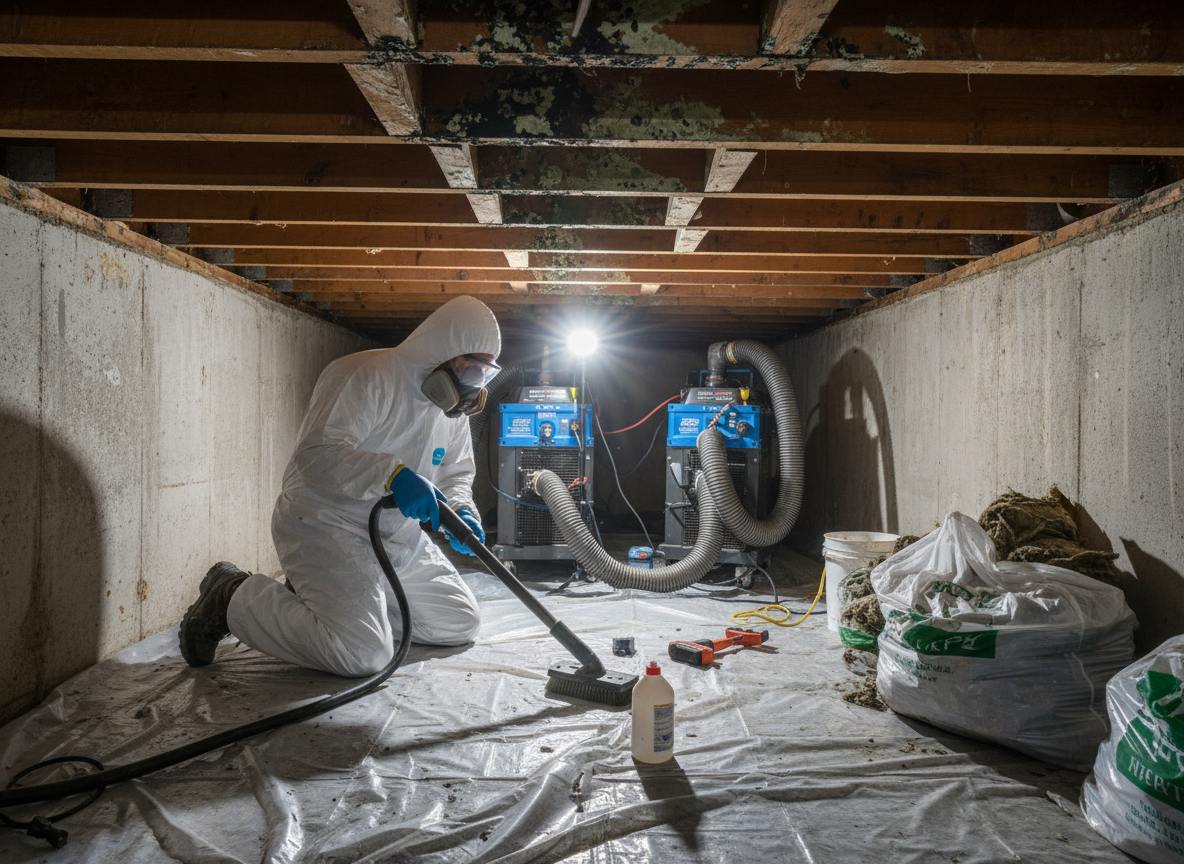
Crawl spaces in Riverton homes, especially those built before the mid-1990s in neighborhoods like Western Springs and Harvest Park, often trap moisture when cold winter air meets warmer ground temperatures. This creates condensation on joists and insulation that feeds mold growth even in the region's semi-arid climate. Hot summers add another layer as irrigation from nearby properties and occasional heavy runoff from the foothills can push water under foundations in areas like Riverton Meadows. Removing the mold requires sealing vapor barriers, improving ventilation, and treating affected wood without disturbing the home's structural integrity above.
Salt Lake County building practices left many crawl spaces with minimal insulation and no proper drainage grading, which becomes obvious after a winter freeze-thaw cycle. When homeowners notice musty odors or see discoloration on floor joists, the mold has usually spread into the soil and onto ductwork. Proper removal means isolating the space, HEPA vacuuming, applying EPA-registered antimicrobials to lumber, and installing a sealed vapor barrier rated for local soil conditions. Skipping the vapor barrier step almost always leads to rapid regrowth once temperatures drop again.
Access challenges are common in older Harvest Park properties where low clearance and narrow entry points force technicians to work in sections. Nearby cities like Draper, South Jordan, and Herriman share the same cold-winter moisture pattern, so crews from 1926 W 12600 S routinely handle cross-town calls. The work must be completed without introducing new moisture sources, which means checking irrigation lines and ensuring downspouts direct water at least six feet from the foundation before any encapsulation begins.
Technician insight
In Riverton, the thing that catches most people out with crawl space mold removal is the way cold winter nights pull moisture out of the ground and onto floor joists in homes built before the 1990s in Western Springs and Harvest Park. Homeowners often seal the vents thinking it will dry the space, but that traps the humidity and makes the mold worse once spring arrives.
Western Springs Crawl Space After Winter Runoff
A homeowner in Western Springs noticed musty air coming through floor vents after a January thaw. Inspection showed black mold on joists and damp soil from poor grading. Crews removed insulation, treated the lumber, installed a sealed vapor barrier, and regraded the exterior to direct water away from the foundation. Odors cleared and no regrowth appeared the following winter.
How it works
- 1
Initial Assessment
Technician enters the crawl space from the Riverton address to map moisture levels, identify mold colonies on joists and soil, and check for standing water linked to winter runoff.
- 2
Containment Setup
Plastic sheeting and negative air machines isolate the space so spores do not migrate into living areas above, especially important in compact Harvest Park floor plans.
- 3
Removal and Treatment
HEPA vacuuming, antimicrobial application to lumber, and removal of contaminated insulation while protecting nearby utility lines common in Salt Lake County homes.
- 4
Moisture Control Installation
New vapor barrier and ventilation adjustments prevent future condensation during cold Riverton winters before the job is signed off.
Pricing
Cost depends on square footage, depth of mold into soil, and access difficulty in older Riverton homes; upfront quotes provided before work begins.